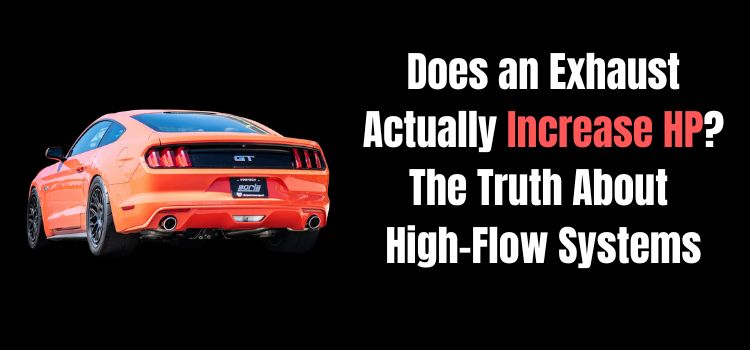
It is the age-old question in the automotive world: If I change my exhaust, will my car actually go faster? While many people install aftermarket systems just for the aggressive sound, performance enthusiasts know that the right setup is a functional tool. But the truth about horsepower gains isn't just about making the pipes bigger or louder; it’s about physics.
In this post, we’re breaking down the science of the best performance exhaust systems and answering your most common questions about real-world power gains for iconic models like the Corvette, Mustang, and even modern sport sedans.
The Science of Scavenging: How Exhaust Creates Power
An internal combustion engine is essentially a giant air pump. The more efficiently it can pull air in and push exhaust out, the more power it makes.
Factory exhaust systems are often designed with two goals that kill performance: cost savings and extreme sound dampening. This results in "crush-bent" pipes that restrict airflow and heavy, baffled mufflers that create backpressure. High-flow systems solve this by using mandrel-bent tubing (which maintains a constant diameter through every curve) to ensure your engine never has to "fight" to exhale.
Your Horsepower Questions Answered
Q: What is the best exhaust for horsepower gains on a naturally aspirated V8 like the Corvette C5 or Mustang GT?
A: It’s all about reducing that backpressure bottleneck. In engines like the legendary LS1 in the Corvette C5 or the modern Coyote 5.0L in the Ford Mustang, the factory setup is often the weakest link in the chain.
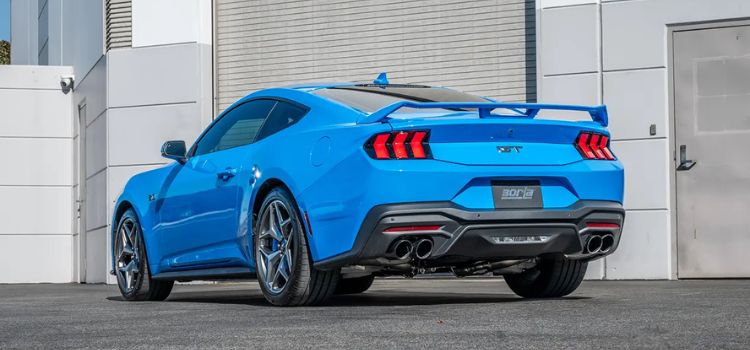
By upgrading to a mandrel-bent system with high-flow mufflers, you allow the engine to breathe at high RPMs. On a bone-stock Corvette C5, a premium cat-back can add roughly 10–15 HP. The new Mustang S650 sees gains of 5–8 HP from a cat-back alone, numbers that jump significantly once you pair them with high-flow headers and a tune.
Q: Does a performance exhaust help turbocharged sedans like the Kia K5 GT or the Toyota Camry V6?
A: Absolutely, but for different reasons. For the Kia K5 GT (2.5T), a high-flow exhaust reduces the "stack-up" resistance against the turbocharger. Less resistance means the turbo can spool up faster, reducing lag and giving you more immediate torque.
For the Toyota Camry TRD (3.5L V6), the benefit is heat management. Performance systems clear hot exhaust gases faster during aggressive driving. This prevents "heat soak," a condition where high temperatures sap your engine's power during long commutes or track sessions.
Q: Will a louder exhaust always mean more performance?
A: Not necessarily. This is a common myth. A "straight-pipe" setup might be incredibly loud, but it can actually hurt your performance by destroying exhaust gas velocity.
A truly best performance exhaust, like those engineered for the Lexus RC F, is "tuned." It maintains the velocity needed to "scavenge" (pull) exhaust out of the cylinder at low speeds to protect your low-end torque, while still providing that unrestricted high-end horsepower scream.
The Bottom Line: Does It Matter?
If you are looking for the best exhaust for horsepower, look past the decibel level and look at the engineering. Whether you are tracking a Dodge Challenger or upgrading your daily-driver Kia K5, a high-flow system is the foundation for all other performance mods.
By removing the factory bottleneck, you aren't just making noise; you're letting your engine perform the way it was designed to.
Ready to find the perfect fit for your ride?