Loud for You. Quiet for Me.
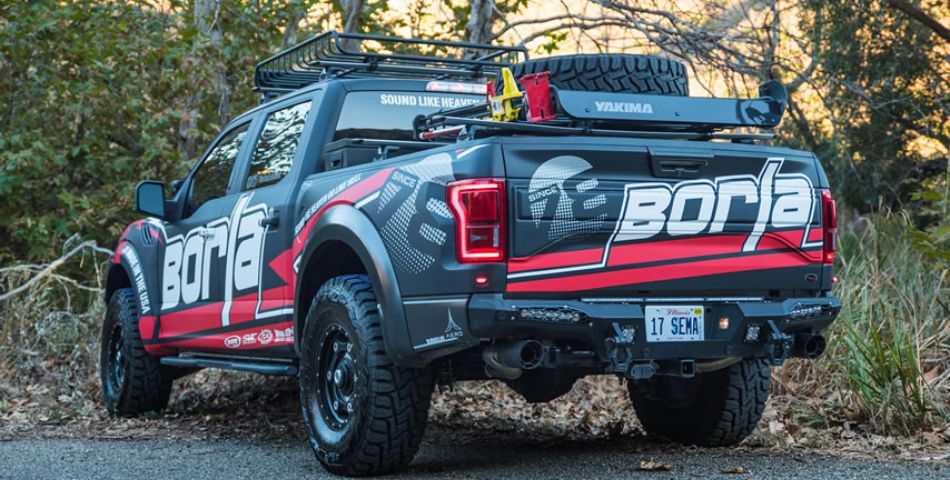
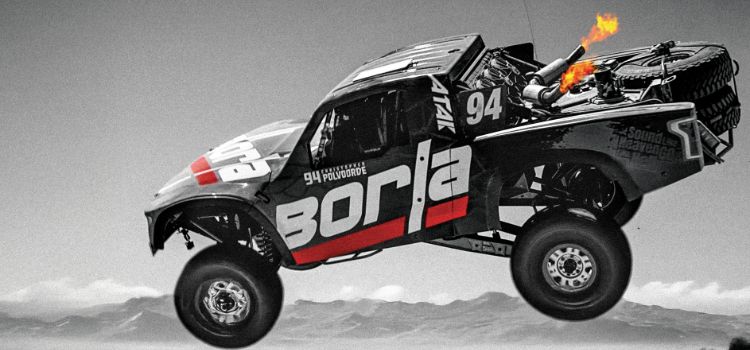
When Christopher Polvoorde straps into the cab of his Mason Motorsports All-Wheel Drive Trophy Truck, he needs to think. Race pace, terrain changes, team communications over the radio: the last thing a professional driver needs is relentless exhaust drone eating away at his concentration mile after mile.
But when that truck clears a jump or comes screaming through spectator zones, it needs to sound exactly like what it is: a high-output racing machine built without compromise.
Those two requirements, cabin comfort and exterior aggressiveness, sound like they should be in conflict. The engineering behind Borla's No Drone technology is precisely why they are not.
What Drone Actually Is
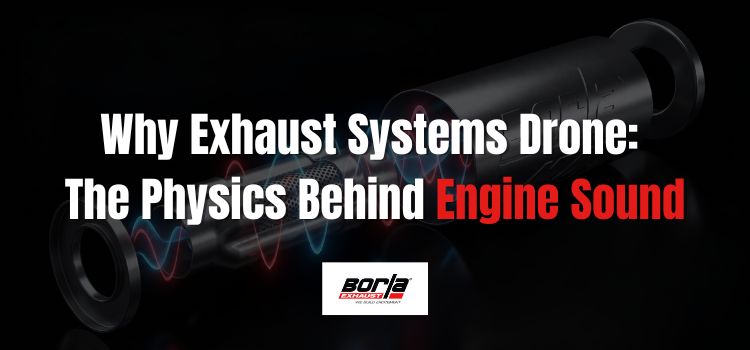
Exhaust drone is a sustained, low-frequency resonance that builds inside a vehicle's cabin at specific engine RPM ranges, typically between 1,500 and 3,000 RPM, which corresponds to highway cruising and sustained high-load driving. It is not loudness. A system can be extremely aggressive at wide-open throttle and still produce significant drone at part-throttle cruise. The two phenomena have different causes.
Drone happens when the dominant frequency produced by the exhaust system aligns with the natural resonant frequency of the cabin interior. The cabin acts like a sound box, amplifying and sustaining a frequency that the driver and co-driver cannot escape. In a race context, that sustained tone interferes directly with radio communication and concentration.
Drone is not a volume problem. It is a frequency problem. Solving it requires engineering the exhaust system to avoid producing the specific frequencies that excite cabin resonance, not simply quieting the system down.
How Borla Eliminates It
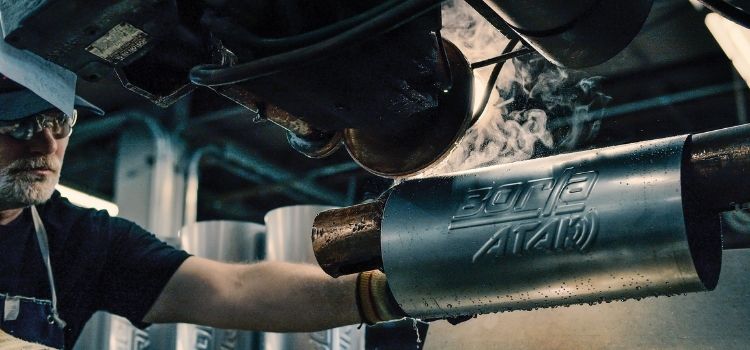
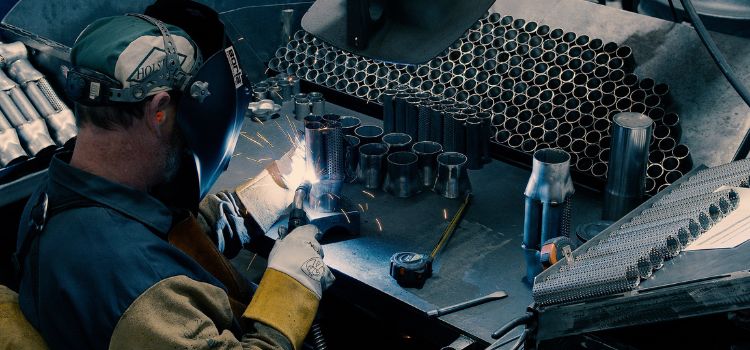
Borla's No Drone technology is built into every muffler design through a combination of patented internal architecture and precise tuning of exhaust gas flow paths. Rather than using baffles or restrictive packing material to absorb sound indiscriminately, Borla's approach uses patented tube configurations to cancel out the specific frequencies responsible for drone while allowing higher-frequency exhaust tones to pass through cleanly.
The result is a system that produces a distinct, aggressive exhaust note at high RPM and load, but transitions smoothly through the cruise RPM band without building cabin resonance. The driver hears the engine working. They do not hear a sustained, fatiguing tone riding underneath everything else.
Why It Matters at Race Pace
Trophy Truck racing is not a closed-course sprint. These are multi-hour endurance events across courses where consistent decision-making and team communication determine the outcome as much as raw speed does. Sound that fatigues the driver costs time. Communication breakdowns cost position. A system that roars when it should and stays quiet when it must is not a luxury, it is a performance specification.
The aggressive sound of Borla can sometimes present challenges for a pro team at race pace. The engineering behind No Drone is what makes it work at a professional level: roaring outside while staying manageable in the cabin across the entire event envelope, not just at peak output.
The Same Engineering in Street Applications
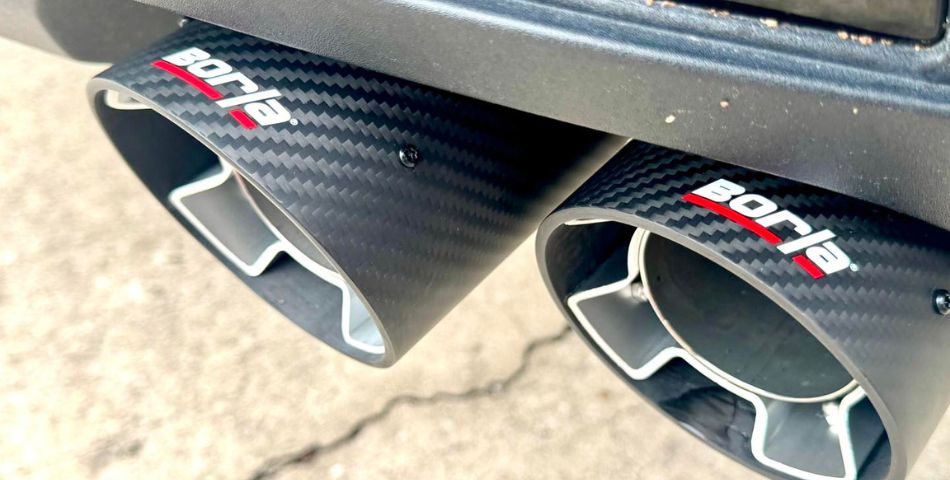
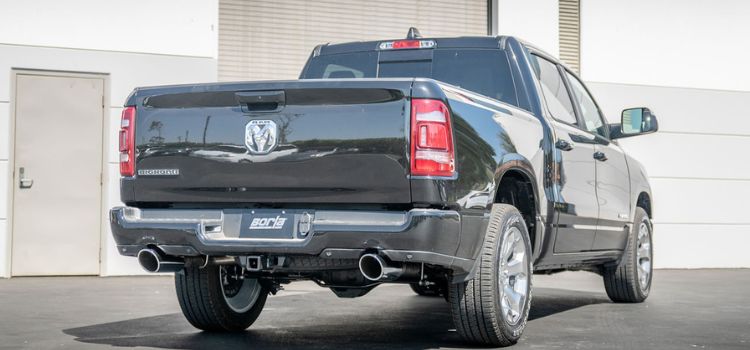
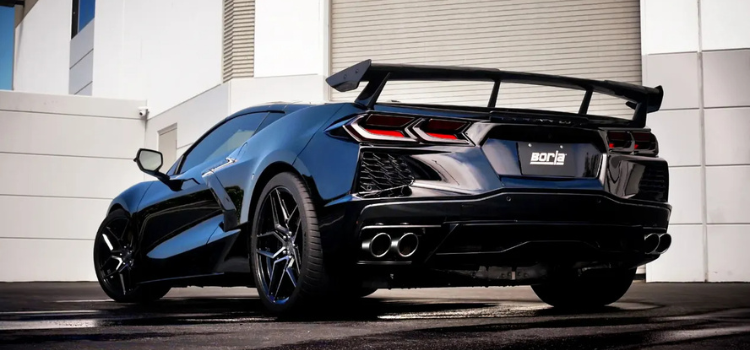
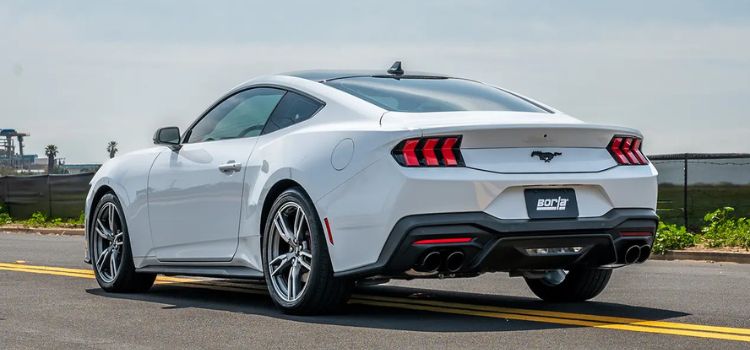
The No Drone engineering that supports professional racing programs is built into every Borla Cat-Back and Axle-Back system across the street lineup. Whether it is an S-Type system on a daily-driven F-150 or an ATAK® system on a weekend Mustang GT, the same frequency management that keeps a Trophy Truck cabin livable is working in the background on every drive.
For drivers who want the aggressive exterior sound profile without the fatigue of cabin drone on longer trips, that engineering is not a trade-off. It is the baseline.
For F-150 Raptor R owners who want a taste of the same philosophy at the street level, Borla's 2023–2026 F-150 Raptor R exhaust systems bring the same No Drone engineering to the most capable production truck Ford builds. Cat-Back and Mid-Section options in S-Type and ATAK® sound levels, backed by the Million Mile Warranty.